Phone
Call Patients and Care Teams Without Sharing Personal Numbers
Buzz Phone gives healthcare professionals a simple way to make and receive calls while keeping personal mobile numbers private. With a dedicated Buzz phone number, caller ID management, and Buzz-to-Buzz calling, teams can communicate more professionally while staying connected to the people who need them.
Whether your staff is coordinating with patients, families, field caregivers, providers, or administrative teams, Buzz Phone helps reduce communication gaps and keeps calling connected to the broader Buzz workflow.
What can Buzz Phone do?
- Protect Personal Phone Numbers: Give team members a professional Buzz number so they can communicate without exposing their personal mobile number.
- Manage Caller ID: Help staff present the right caller identity when reaching patients, families, providers, or external contacts.
- Support Buzz-to-Buzz Calling: Make communication easier between Buzz users inside your organization or care network.
- Connect With Landline and Mobile Users: Call or receive calls from people outside Buzz, including patients, families, partners, and external providers.
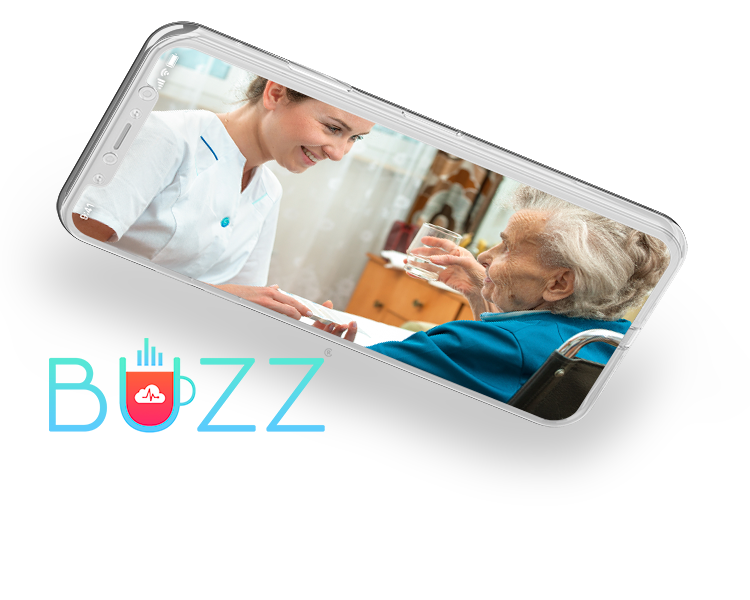
Buzz Phone Features
Personal Buzz Phone Number
Give staff a dedicated number for professional healthcare communication.
Caller ID Management
Control how outbound calls appear to patients, families, and external contacts.
Buzz-to-Buzz Calling
Connect quickly with other Buzz users inside your organization or care workflow.
Call From the Workflow
Keep calls connected to the same environment where your team messages, shares files, coordinates care, and manages documentation.
FAQ
What is clinical workflow optimization?
Clinical workflow optimization is the process of improving how healthcare teams complete clinical, administrative, and communication tasks. It focuses on reducing manual steps, improving coordination, and helping staff complete work more efficiently.
How does Buzz support clinical workflow optimization?
Buzz supports clinical workflow optimization through tools such as eSignatures, document editing, file and image sharing, polling, scheduling, EVV capture, location tools, and EHR integration. These features help reduce disconnected workflows and support faster task completion.
Can Buzz help with reducing clinical burnout?
Buzz can help reduce workflow strain by supporting repetitive task automation, better care coordination, and more organized communication. While no software can eliminate clinical burnout by itself, reducing manual administrative work can help lower daily workload pressure for clinicians and staff.
What is medical workflow automation?
Medical workflow automation refers to using digital tools to reduce manual work in healthcare workflows. This can include automating or simplifying tasks such as forms, signatures, document routing, scheduling, visit verification, and information sharing.
How does Buzz improve care coordination efficiency?
Buzz improves care coordination efficiency by helping teams share documents, manage schedules, create polls, verify visits, exchange information, and keep communication organized within one workflow.
Does Buzz support document editing and e-signatures?
Yes. Buzz includes a built-in document editor and e-signature tools (BuzzFlow™. Teams can create, fill, sign, edit, and securely exchange forms, reports, consents, and other workflow documents.
Can Buzz help reduce duplicate documentation?
Buzz can help reduce duplicate documentation by supporting document editing, file storage (BuzzDrive), form sharing, and EHR integration within the workflow. This helps teams keep information connected instead of repeatedly entering or sharing the same information across separate tools.
What is EVV in Buzz?
EVV stands for Electronic Visit Verification. Buzz includes built-in EVV with caregiver geolocation tracking to help verify client visits, confirm tasks, support compliance, and improve invoicing accuracy.
How does EHR integration help workflow efficiency?
EHR integration helps keep information connected with the EHR system your organization uses. This supports more efficient updates, reduces disconnected communication, and helps clinical teams keep information current.
Why is workflow efficiency important for healthcare teams?
Workflow efficiency is important because clinicians and staff manage many time-sensitive tasks every day. More efficient workflows can reduce delays, improve coordination, reduce repetitive work, and help teams spend more time on patient care and less time on administrative friction.